06 / 06
Unexpected Material Engagements / Independent
After Uprooting
A cardboard-based composite invites a material-led relationship with a more-than-human site.
- Role
- Independent designer-researcher
- Material
- Cardboard-fibre composite
- Methods
- Recipes, probes, form finding
- Year
- 2026
Material-driven design
Letting the material change the direction.
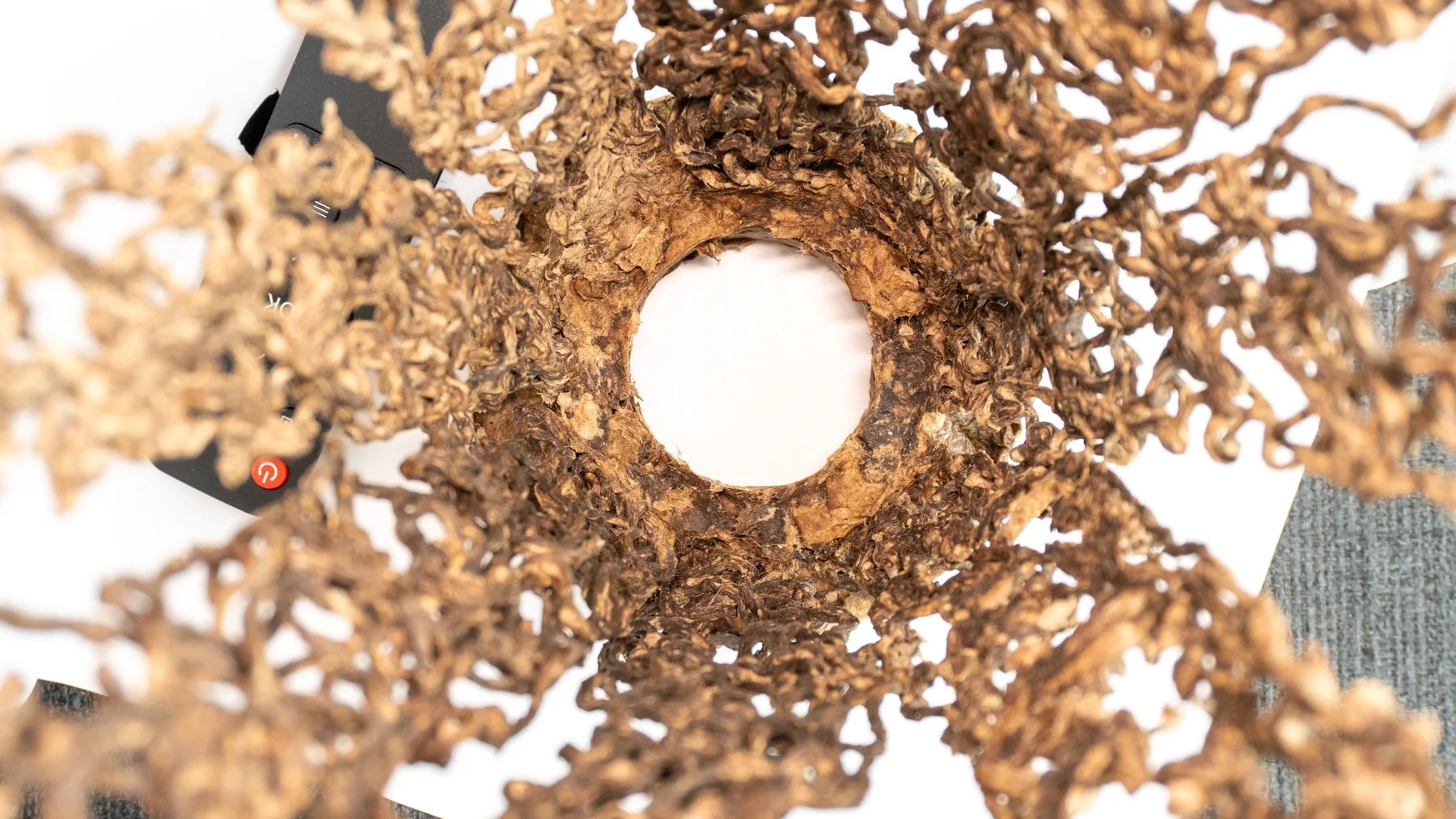
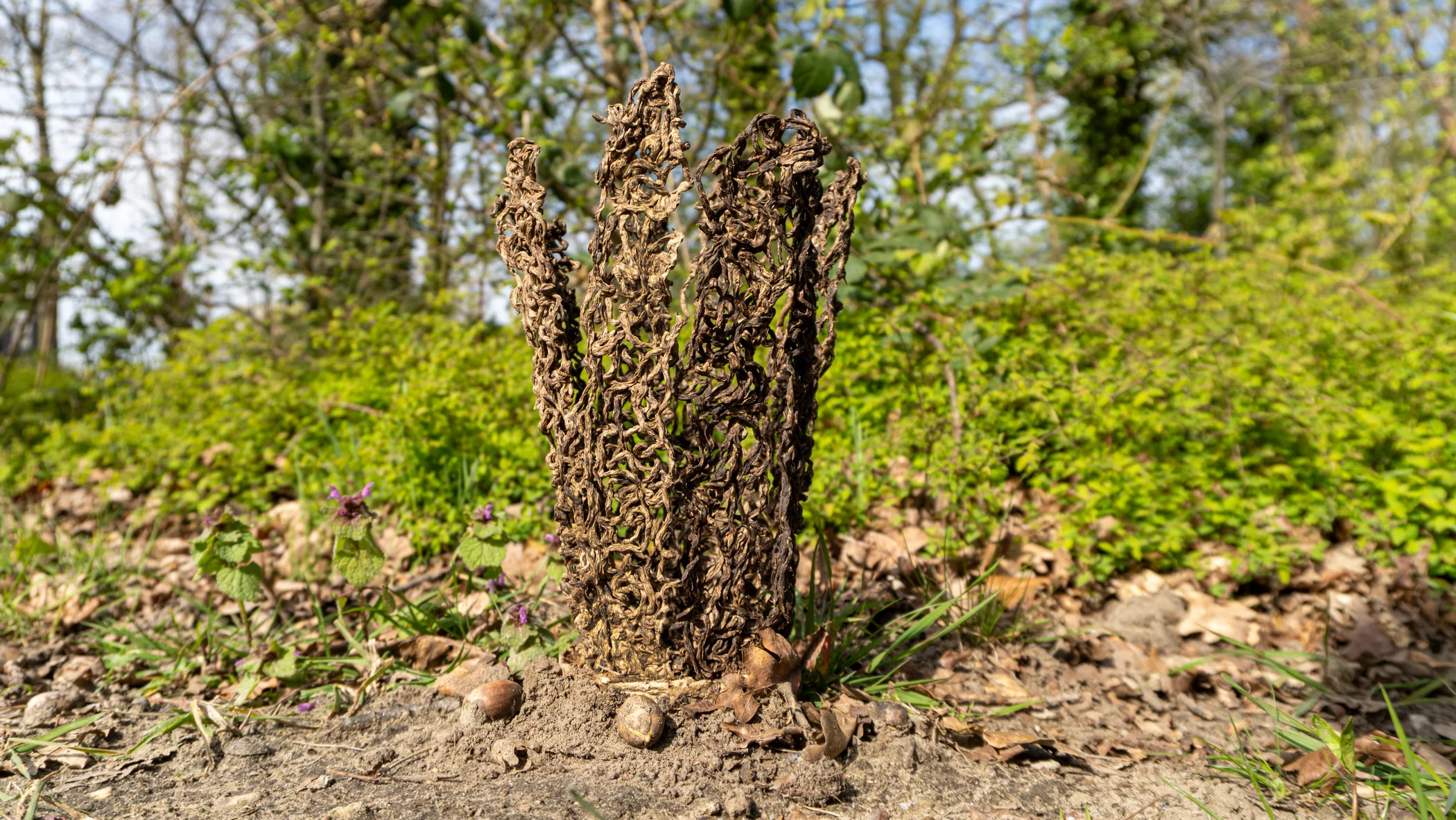
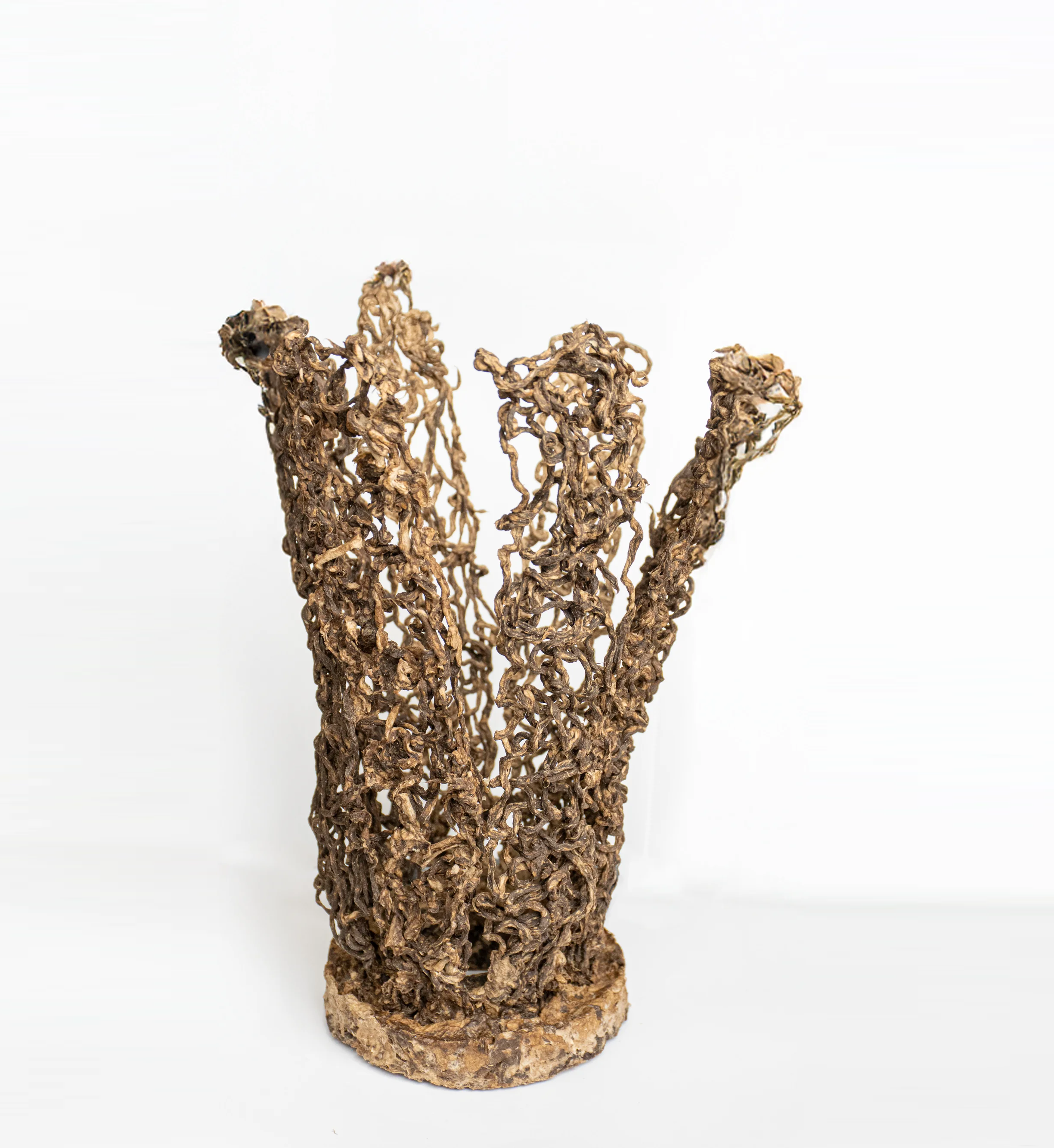
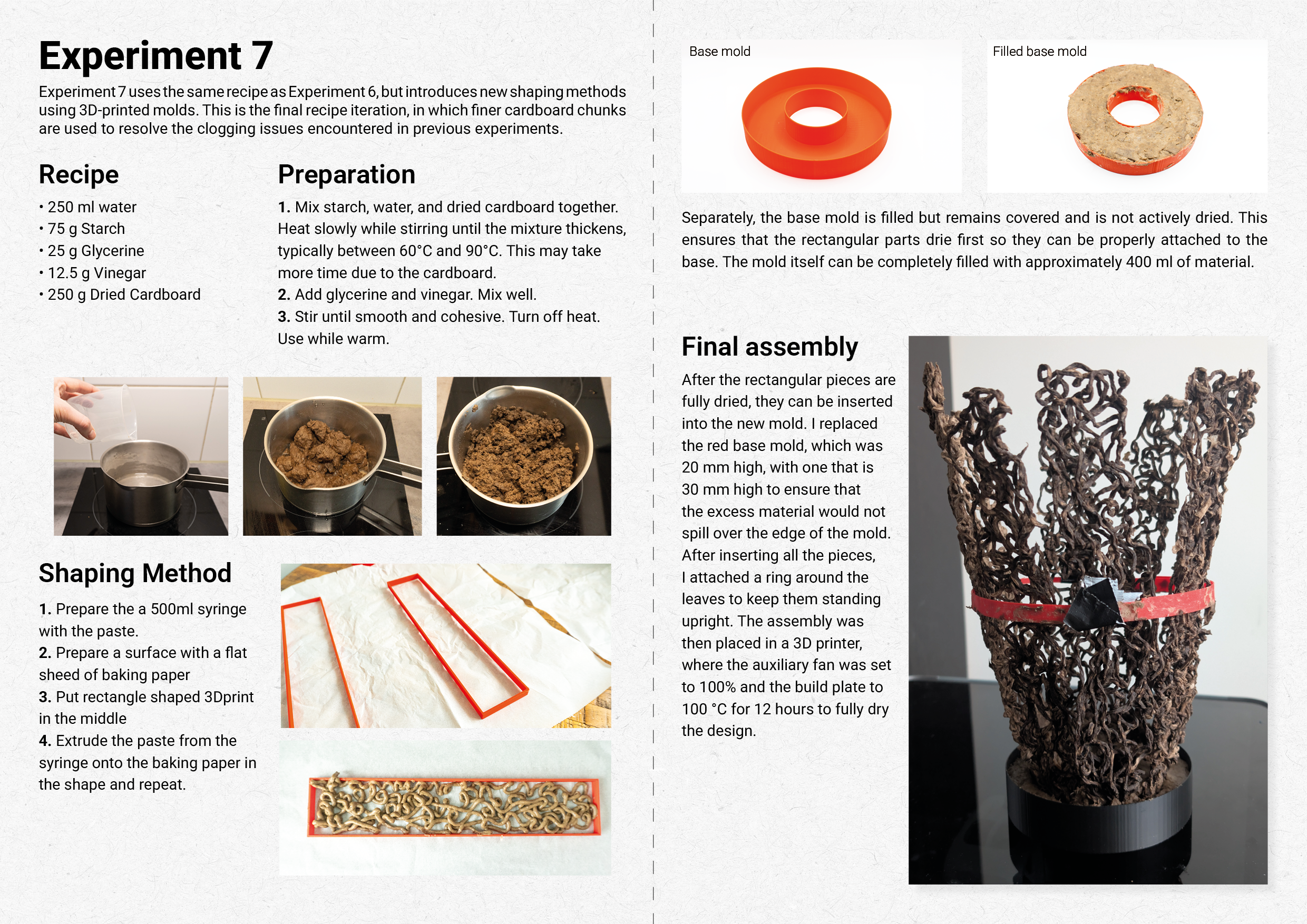
After Uprooting is an acorn catcher developed through material-driven design. Discarded cardboard was processed into a fibre composite, then tested through variations in mixing, shaping, hydration, and drying. Its sensitivity to moisture produced forms that could not be fully determined in advance.
Rather than treating this unpredictability as a flaw, the process used it to guide the object’s development. The composite’s folds and irregular surfaces informed a root-like form that catches acorns beneath a tree. The finished object reflects both the behaviour of its material and the environment in which it is used.
From 3.3g
to 100g.
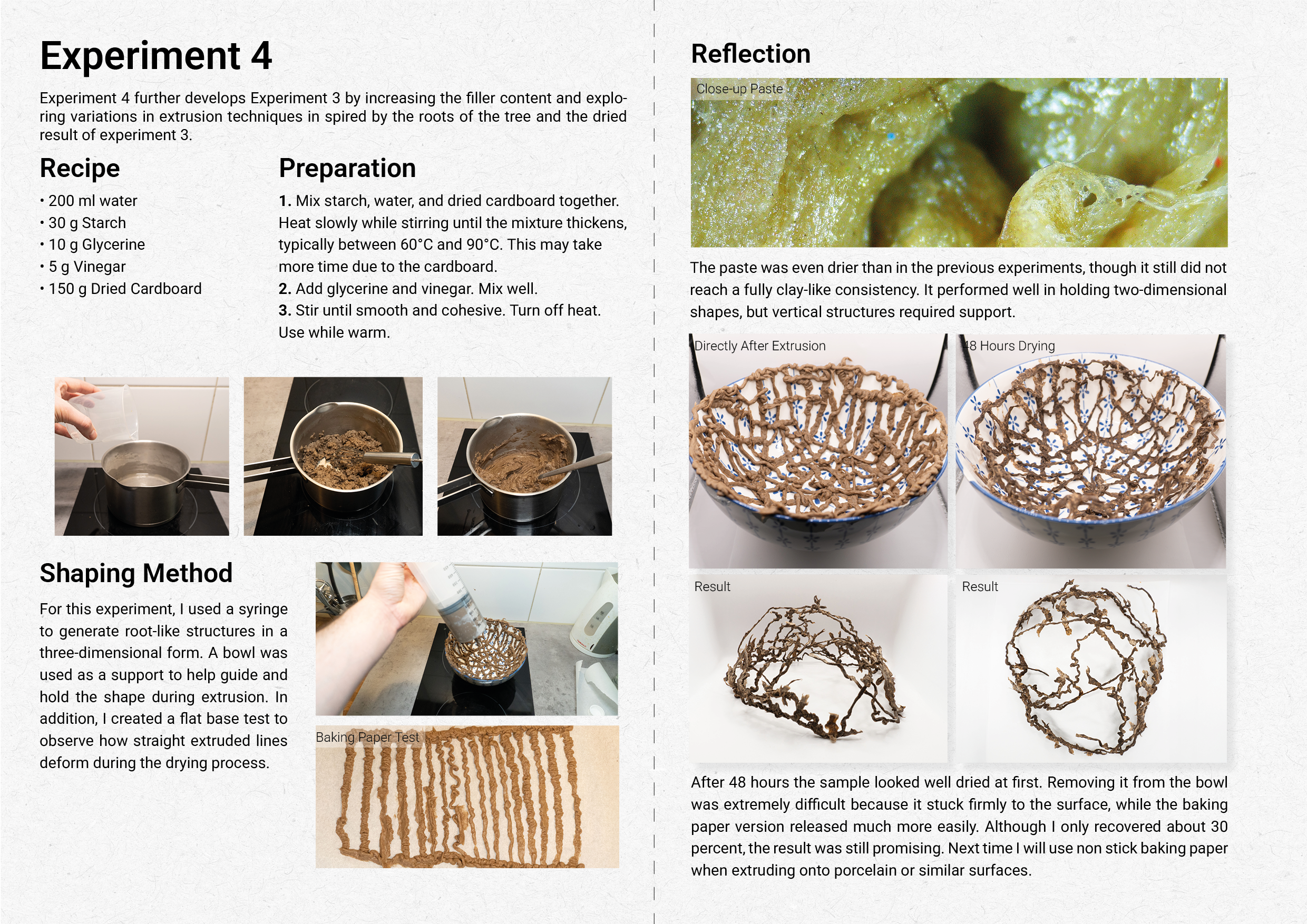
The first recipe used 3.3 grams of cardboard per 100 millilitres of water. Across six recipes, the cardboard content gradually increased to 100 grams.
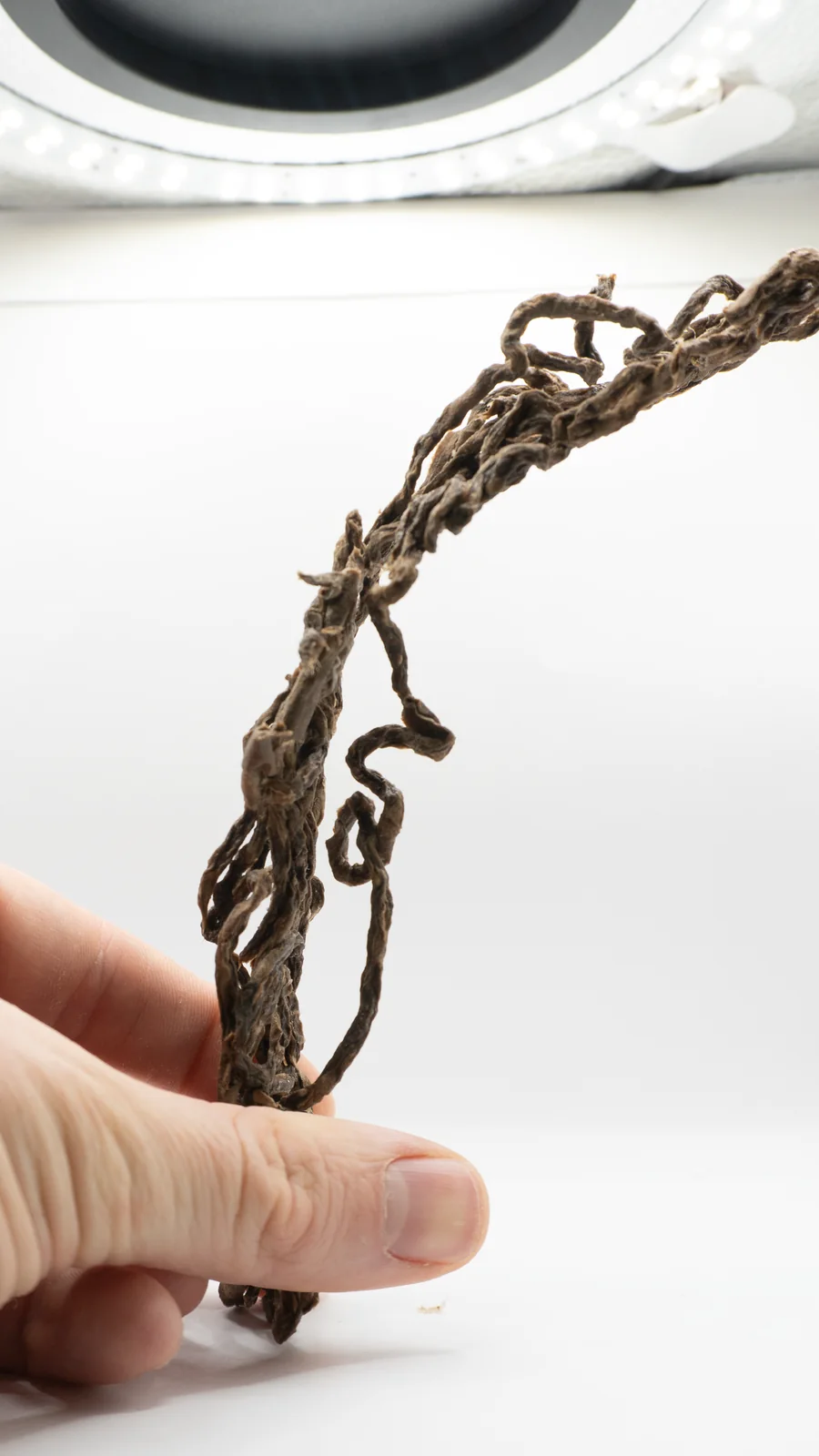
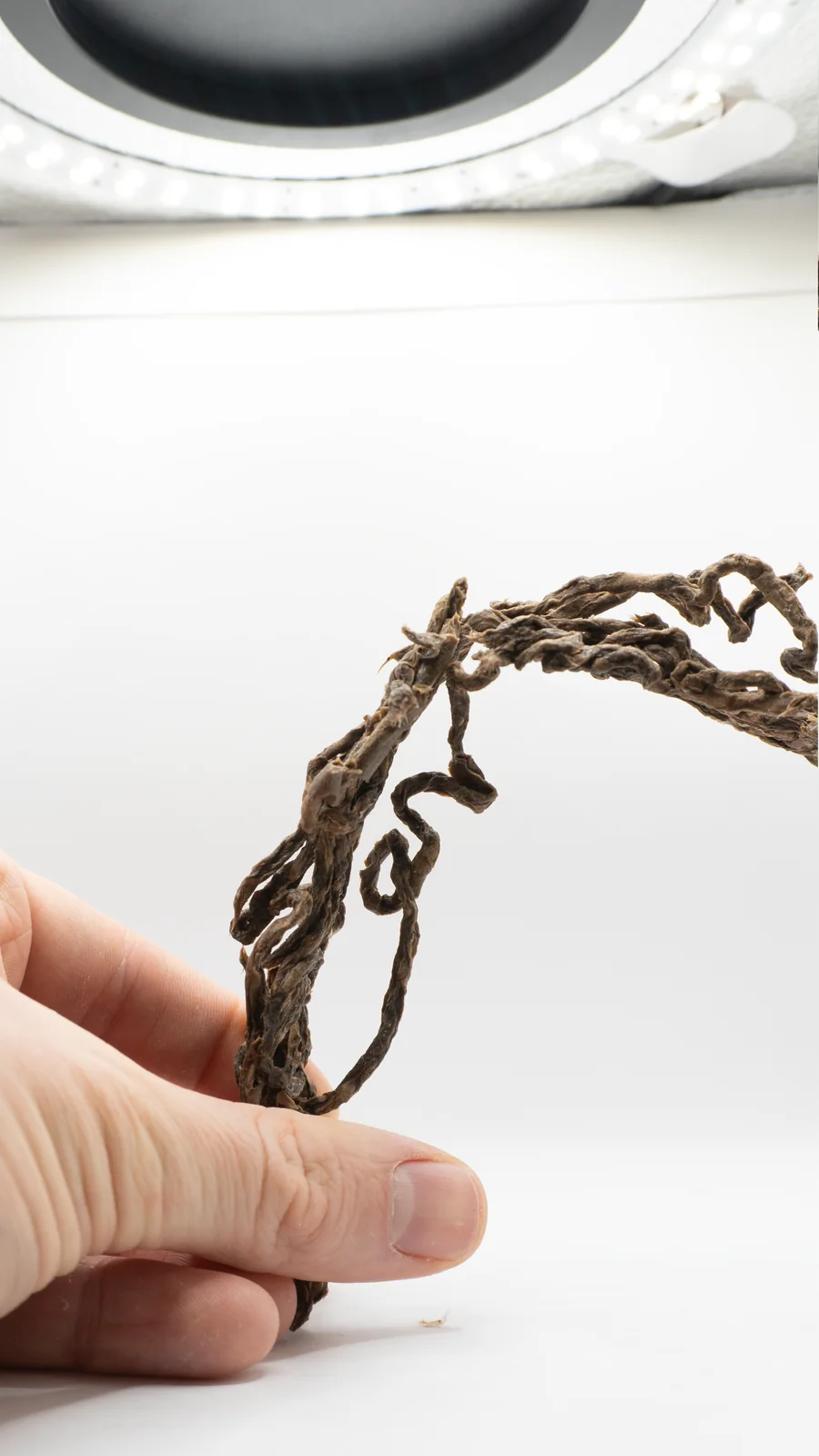
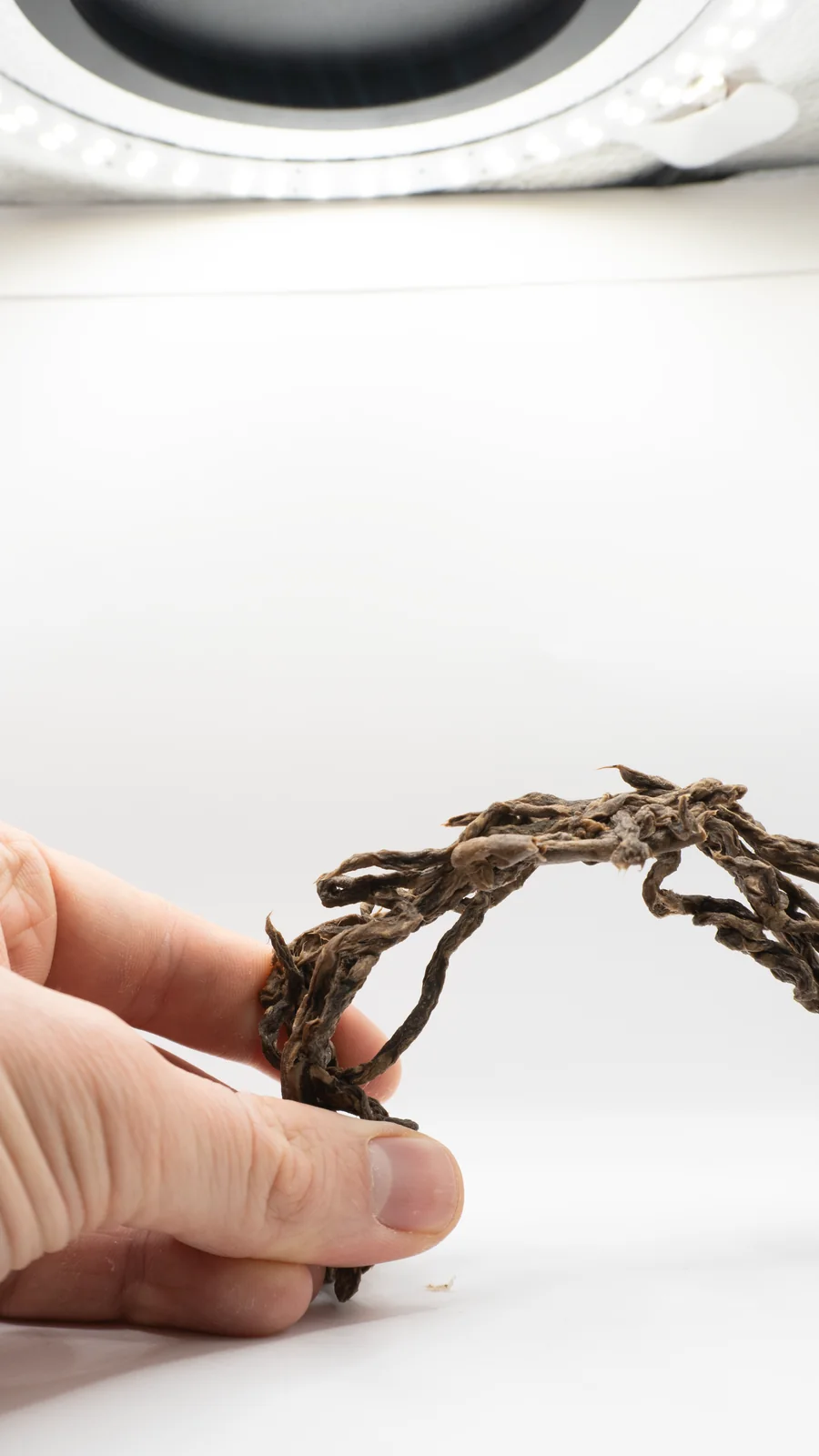
Systematic documentation made small variations visible: fibre density changed strength, drying changed curvature, and moisture could reactivate movement after the material had set.
Recipe and form finding
Preparation became a design tool.
Material movement
One sample, six stages of response.
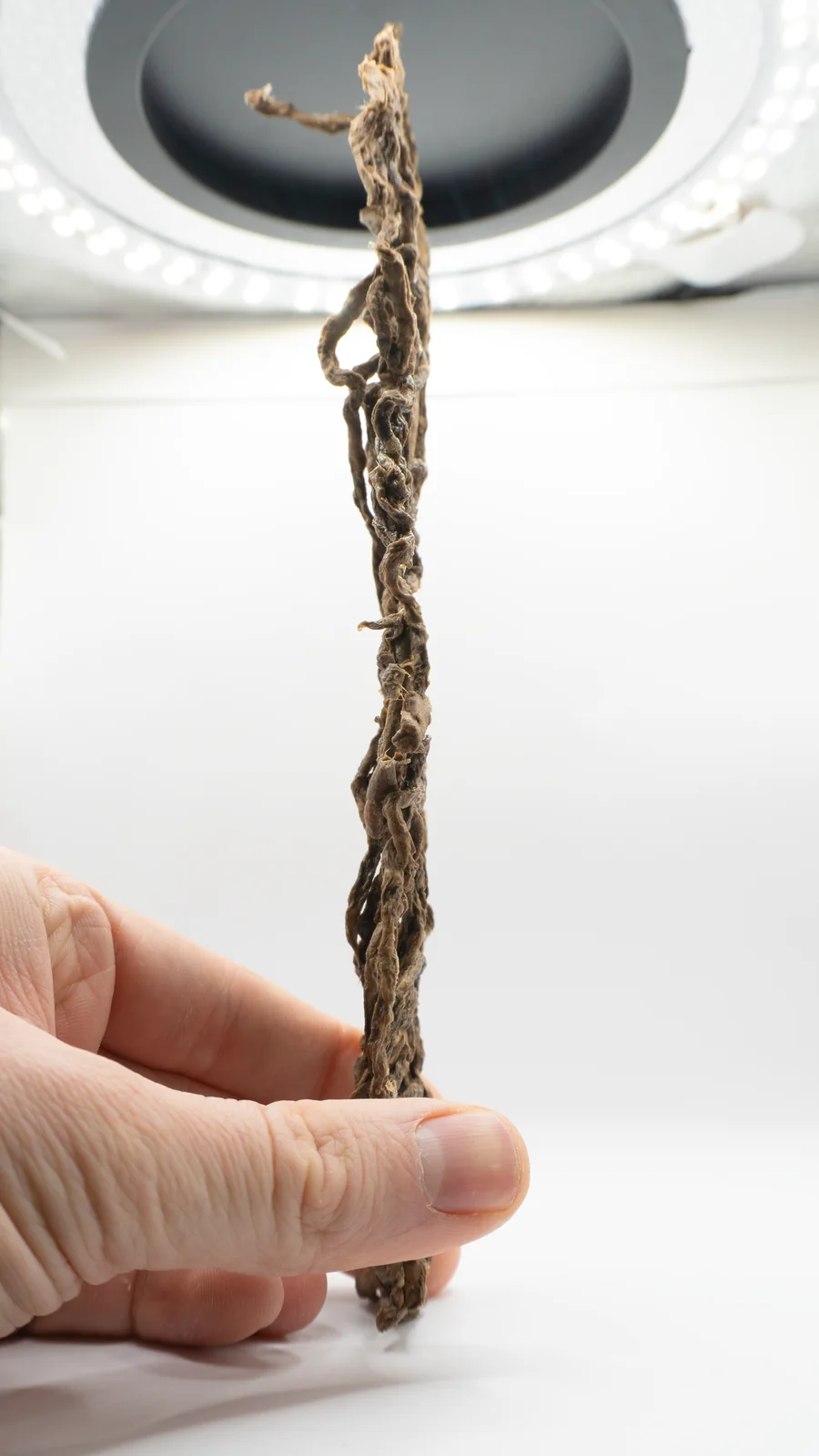
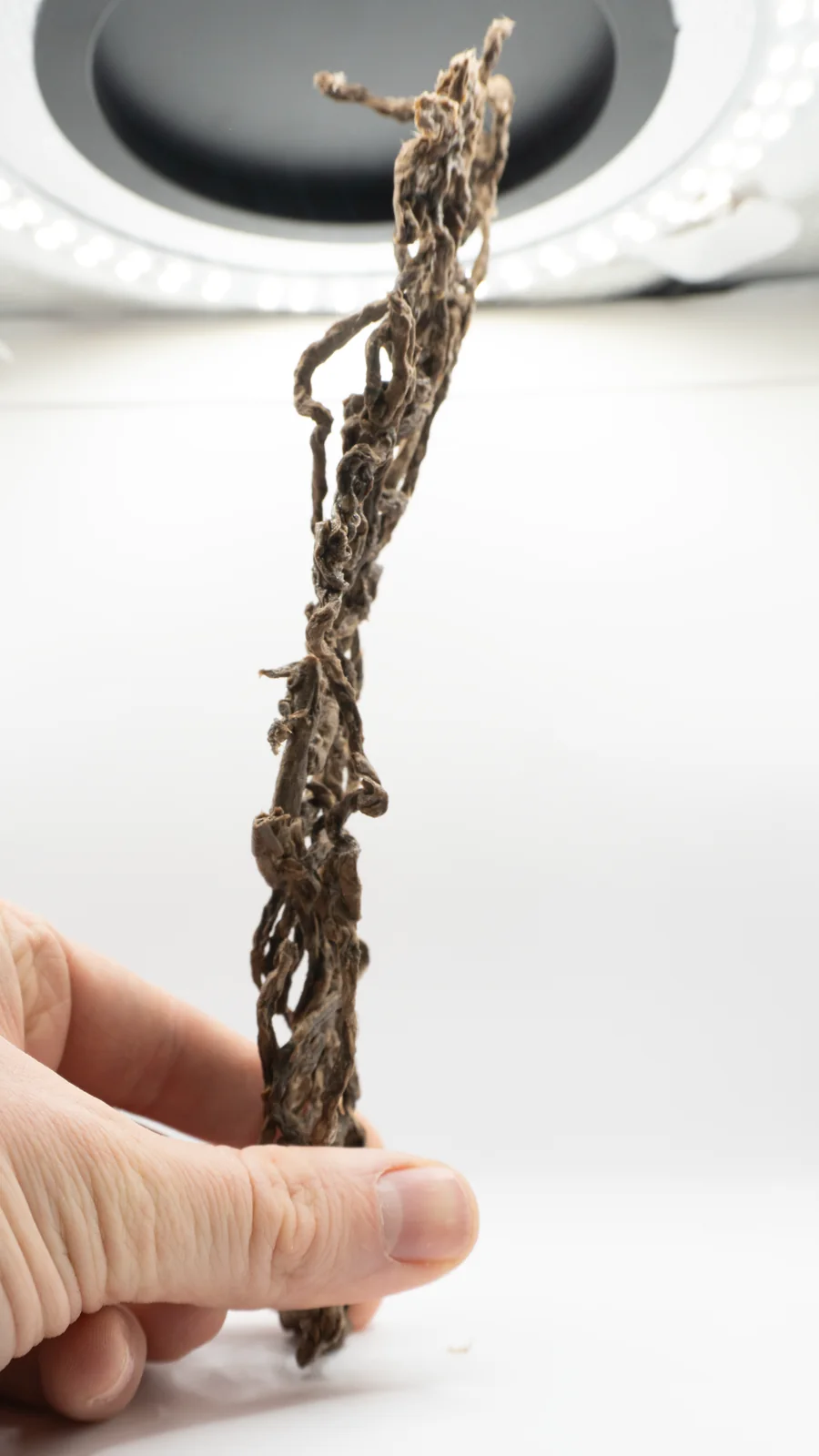
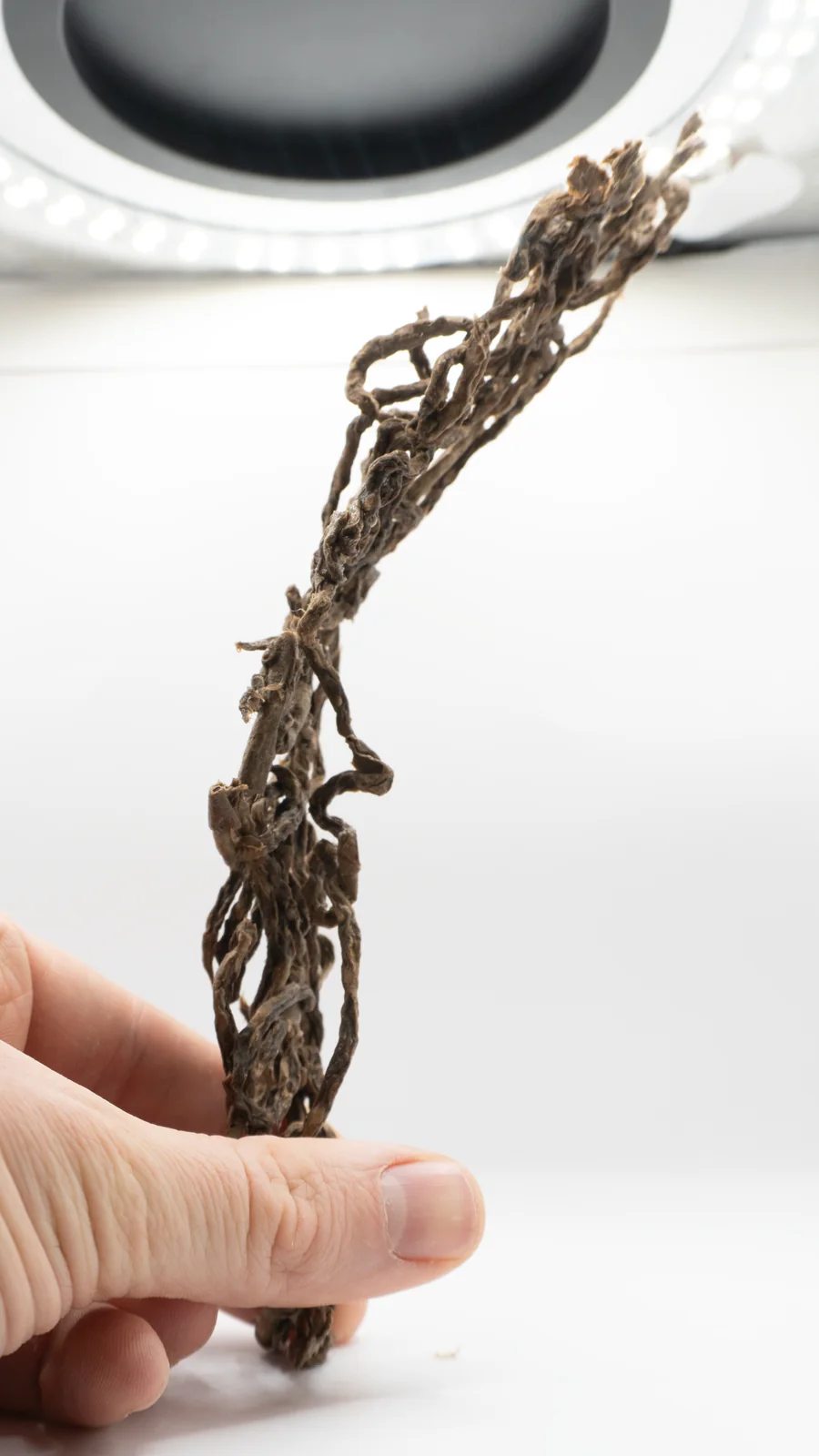
Form finding
A structure imagined as rerooting.
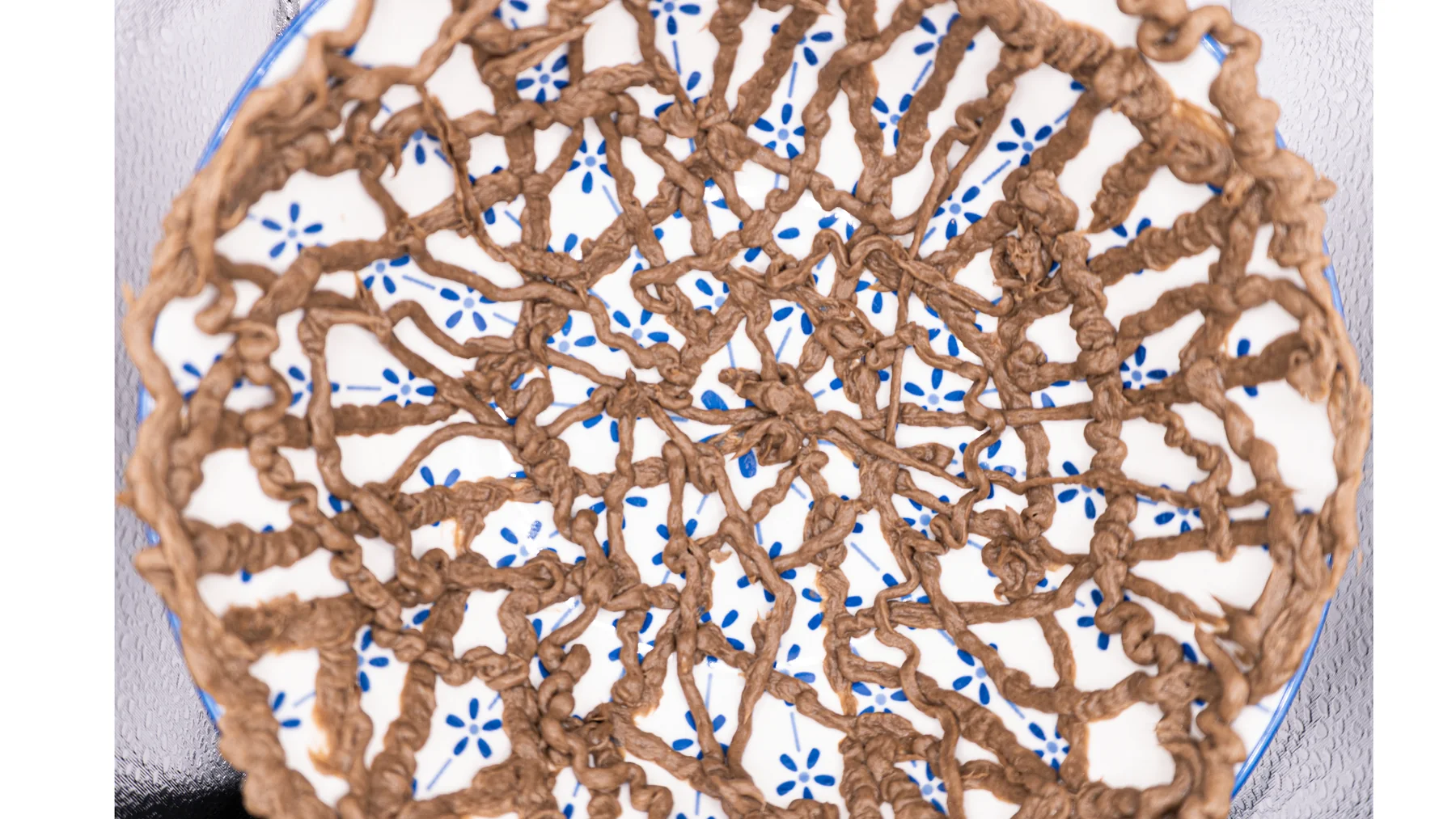
Speculative reasoning reframed the composite as something that could reroot itself. That narrative guided the development of branching structures while hydration and dehydration kept the form dynamic.
Aesthetic intention, material behavior, and story remained in tension. Leaving room for unexpected collapse, curling, and growth allowed the form to emerge through the process rather than before it.
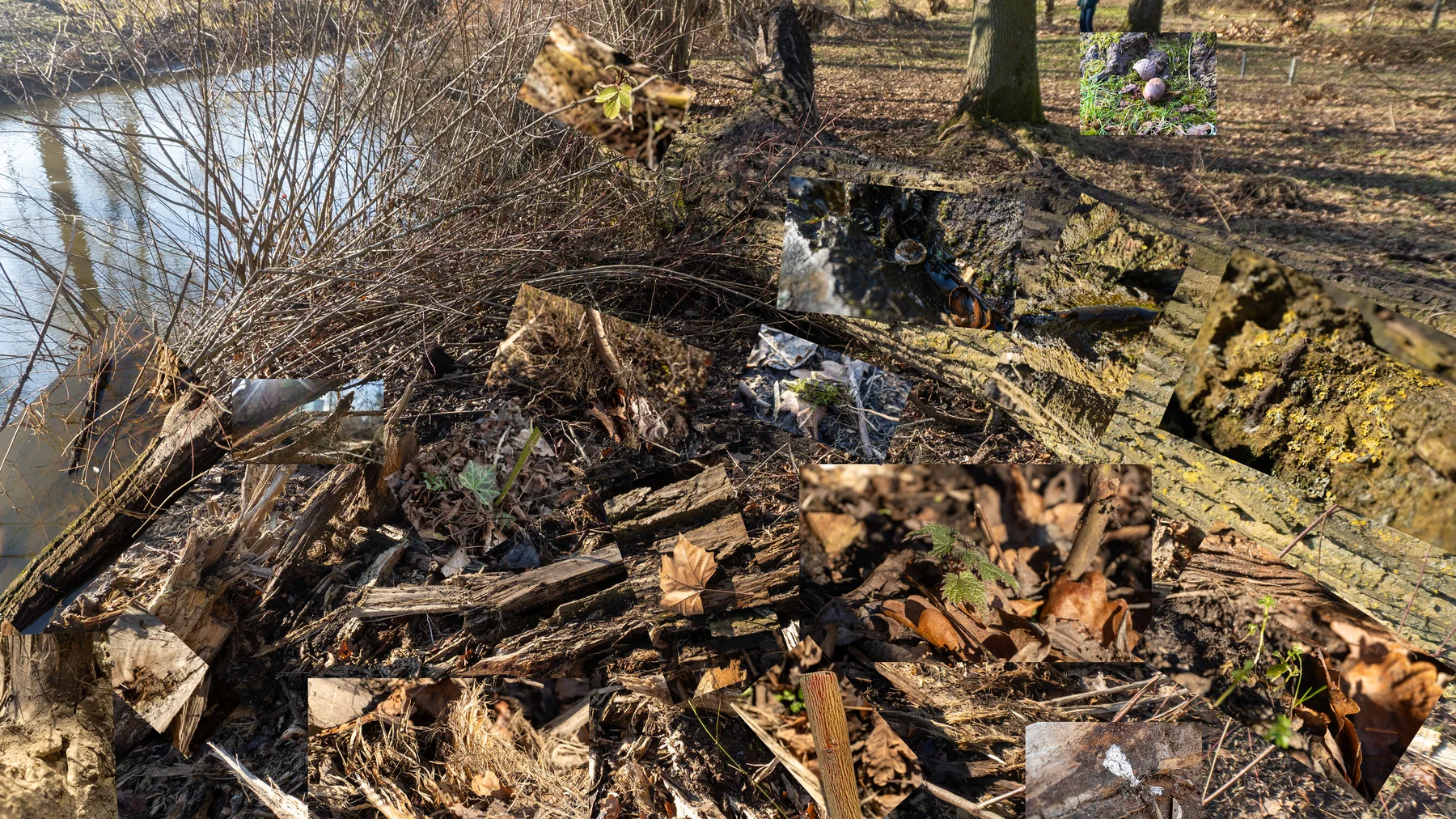
Probing the site
Moving from observation to participation.
Autoethnographic walks and collaging helped make sense of the relationships between the material, site, insects, microbes, plants, and people. These methods informed the placement of four early probes, three of which disappeared shortly afterward. Their disappearance became a finding in itself, drawing attention to activity at the site that was difficult to observe directly and guiding the next experiments.
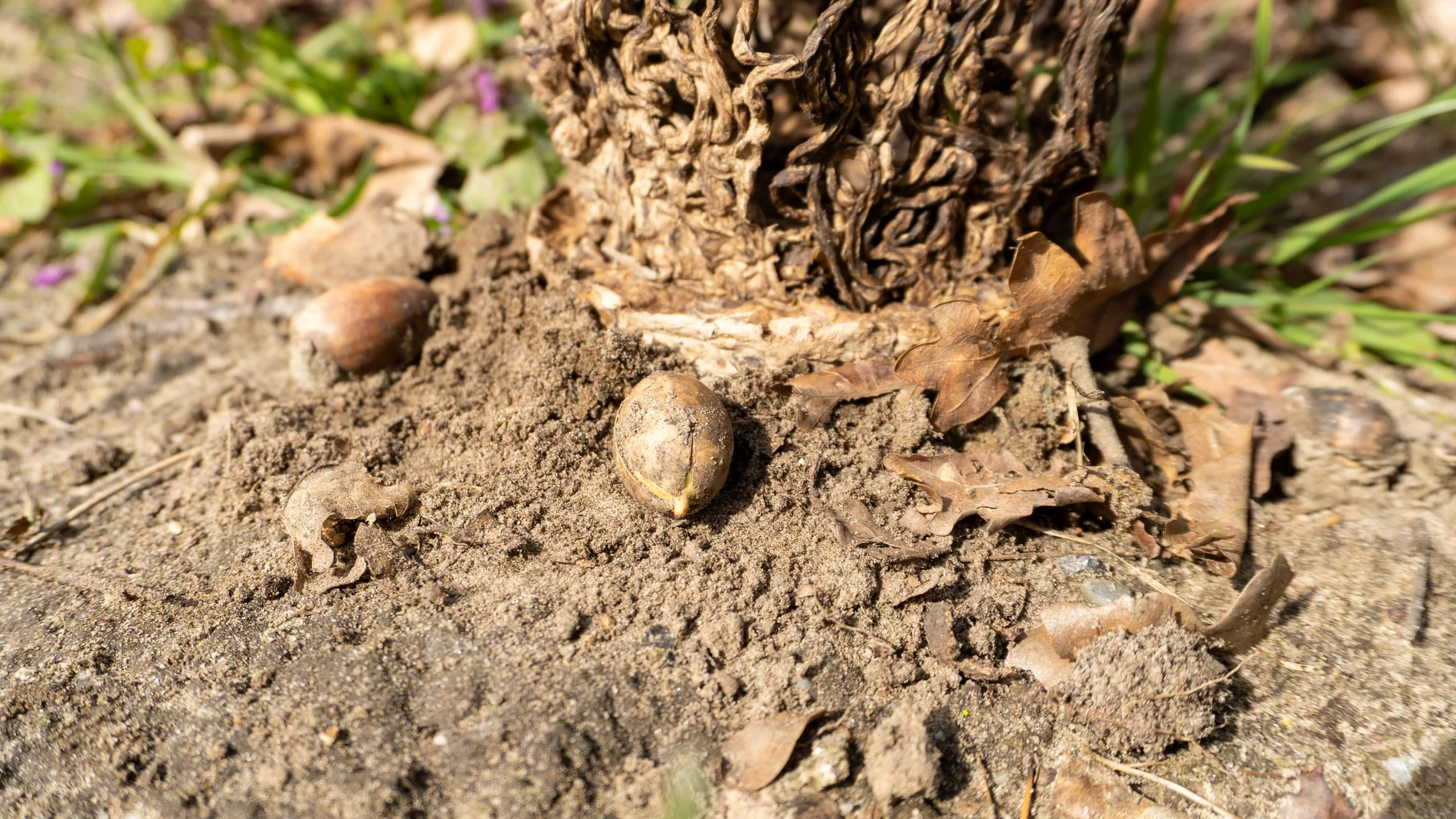
Final installation
A temporary structure placed back into the environment.
Broadening the design vision
Agency can sit with materials too.
Before this design, aking was mainly a way to give people more control over tools, repair, and adaptation. This project expanded that view: materials can also guide interaction and open pathways toward the more-than-human world.