The Queer Art of Failure
Jack and Judith Halberstam framed failure as an escape from fixed expectations and a source of unexpected ways of being.
05 / 06
Research through making / Team project
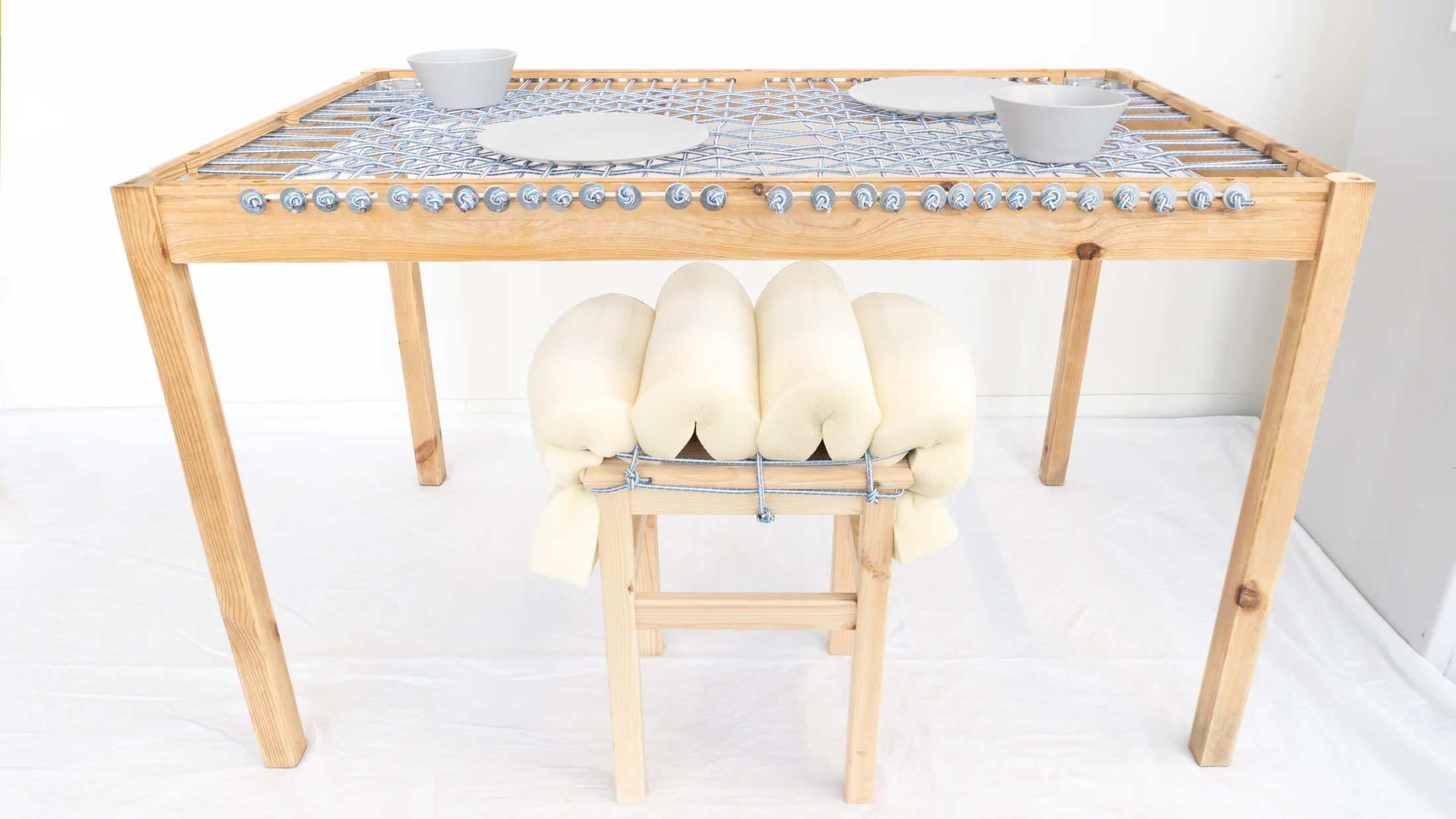
Not a finished table, but a surface in motion: an adjustable woven system shaped by bodies, objects, gravity, and elastic force.
The project
Surface Tension is an interactive table I designed and assembled to explore how a familiar domestic object can invite different forms of use. A wooden frame supports a surface of blue and orange elastic cords that can be rearranged and adjusted by the people using it.
The surface responds to touch and to the weight of objects placed on it. This shifting tension allows the table to support activities such as dining, play, and collective making, while encouraging people to reconsider what a table can be.
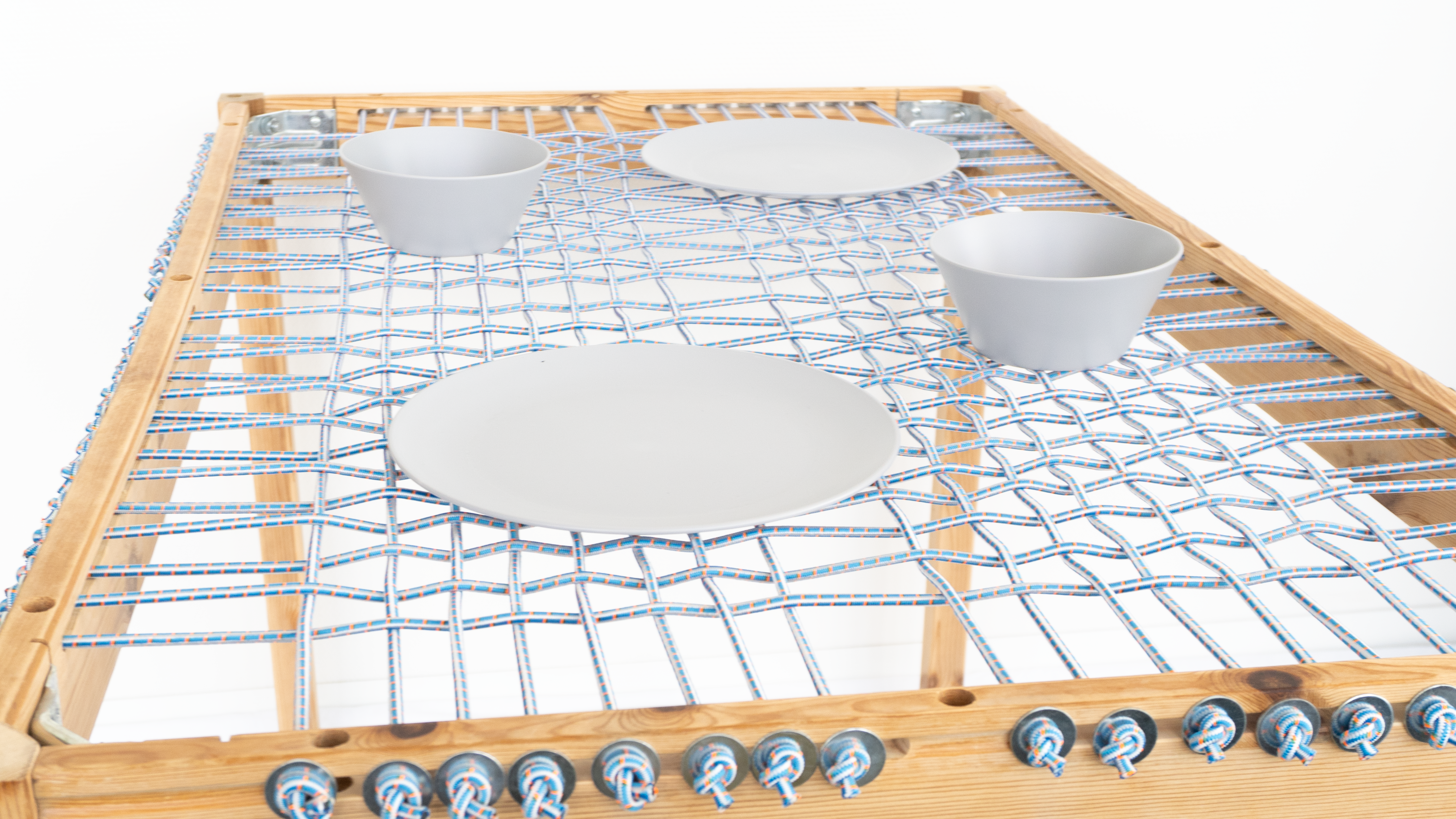
A surface in motion
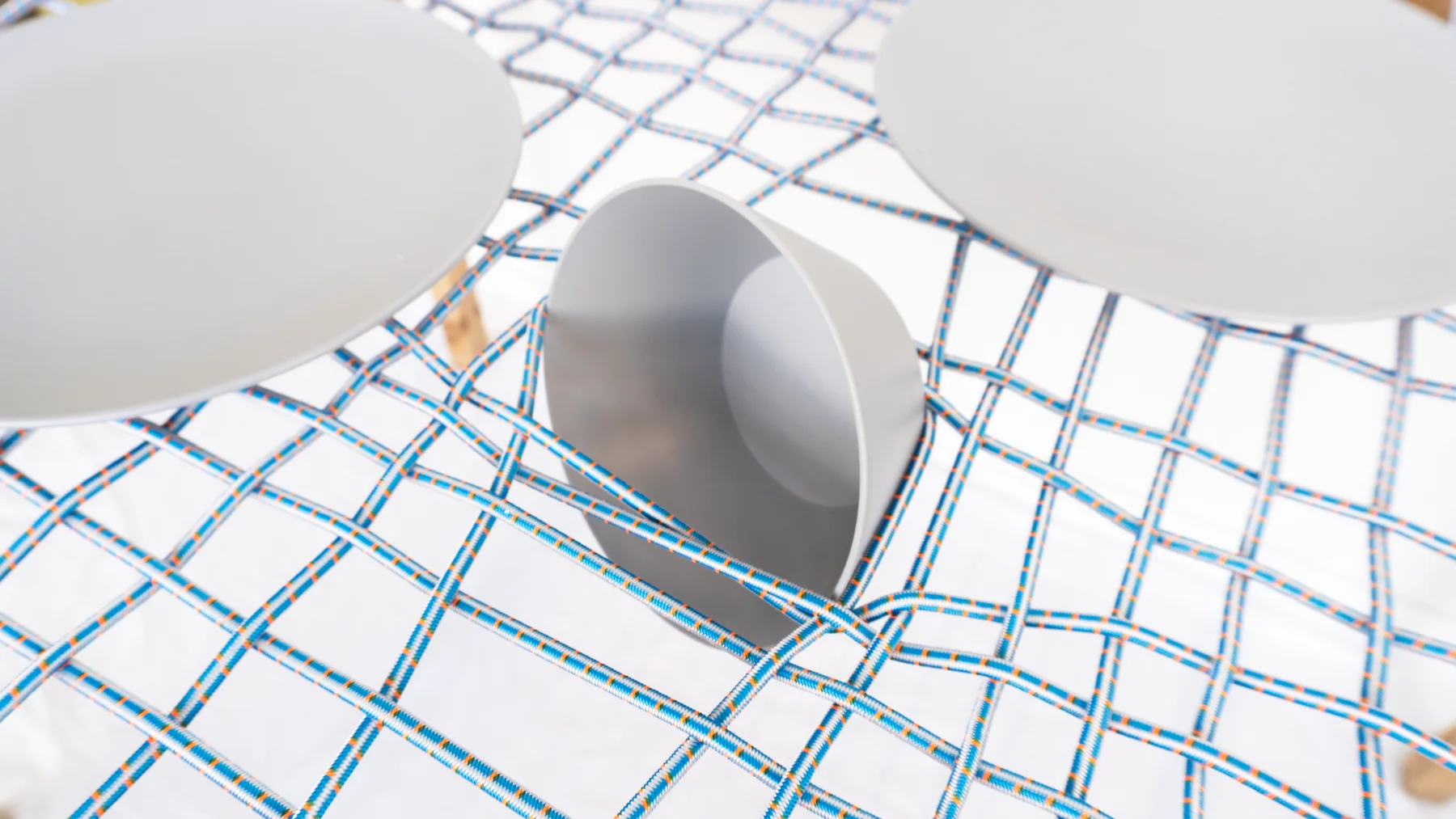
The project began by asking what happens when conventional objects are designed with the intention of failing: a chair without a stable seat, or a table that cannot hold objects in the expected way.
Instead of treating ambiguity as a defect, Surface Tension uses it to invite experimentation, misuse, negotiation, and collective interpretation.
Jack and Judith Halberstam framed failure as an escape from fixed expectations and a source of unexpected ways of being.
Tim Ingold describes making as following forces and material flows rather than imposing a predetermined form.
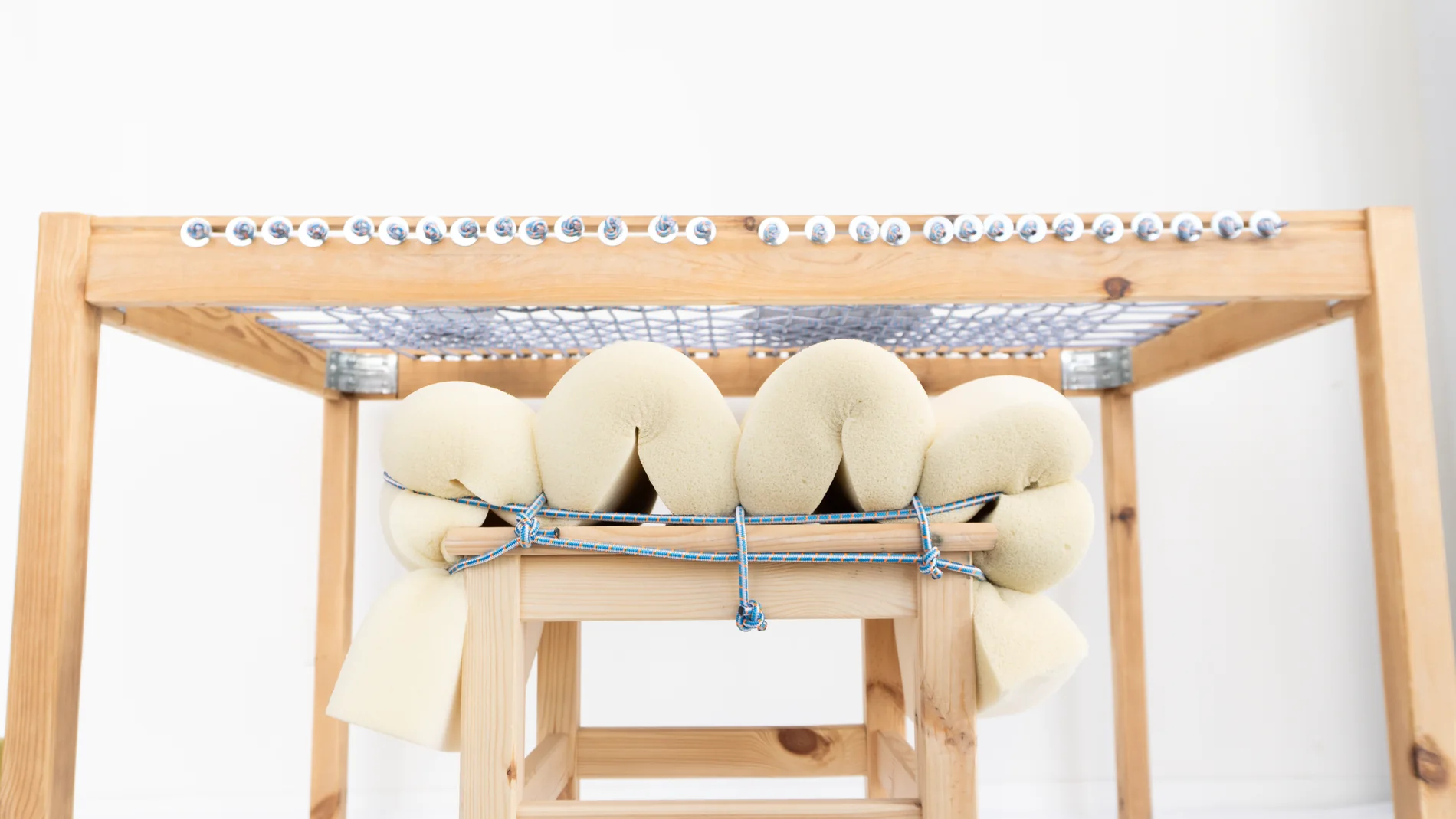
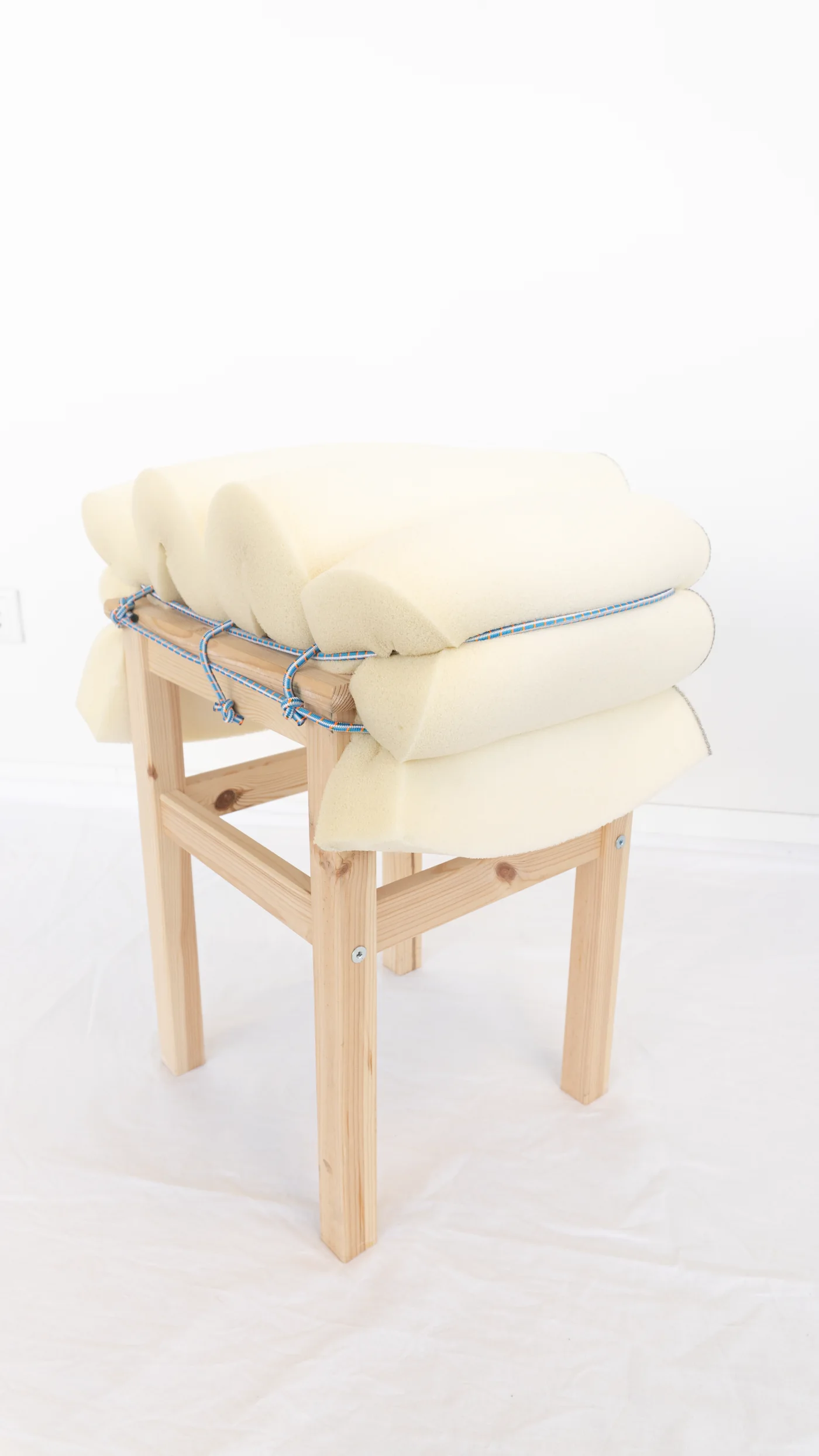
The companion stool
Memory foam is left exposed rather than hidden beneath upholstery. Elastic cord gathers the resisting material into a temporary seat and keeps the forces that shape it visible.
The stool does not begin with a fixed ergonomic shell. Its form arises through negotiation between foam, cord tension, gravity, and the body of the person sitting on it.
Collective making
Through prototyping and observing how people used the table, I learned to treat each interaction as part of the design process. Changes in cord tension and arrangement revealed possibilities I could not have planned in advance, showing me how an open design can develop through making and use